
Vegetable Biryani Recipe – Restaurant Style
Introduction to Vegetable Biryani Recipe
The vegetable biryani recipe is one of the most iconic dishes in Indian cuisine, loved for its rich aroma, layered flavors, and satisfying taste. Made with basmati rice, fresh vegetables, and whole spices, this dish delivers both comfort and celebration in every bite.
Unlike simple rice recipes, biryani follows a layered cooking method that allows flavors to develop slowly. As a result, every grain of rice absorbs the essence of spices, making the dish deeply flavorful and aromatic.
I prepare Vegetable biryani recipe weekly once to get good nutritious and all veggies good for children to get nutrients.

What Makes Vegetable Biryani Recipe Unique?
Vegetable biryani stands apart because of its dum cooking technique, where rice and vegetables are cooked together on low heat. This method helps lock in moisture and enhances taste naturally.
Additionally, this dish is:
- Nutritious – packed with vegetables
- Versatile – can be customized easily
- Balanced – combines carbs, fiber, and spices
For a deeper understanding of biryani’s cultural roots, you can explore Wikipedia
Ingredients for Vegetable Biryani:
Main Ingredients
- 1 cup basmati rice (long-grain preferred)
- 2 cups mixed vegetables (carrots, beans, peas, potatoes)
- 1 large onion (thinly sliced)
- 2 tomato (chopped)
- 1 tsp ginger-garlic paste
- 2 green chilies
Whole Spices
- 1 cinnamon stick
- 2 cloves
- 2 cardamom pods
- 1 bay leaf
Ground Spices
- ½ tsp turmeric powder
- 1 tsp red chili powder
- 1 tsp garam masala
Additional Ingredients
- 2 tbsp yogurt
- Fresh mint & coriander leaves
- 2 tbsp oil or ghee
For nutritional insights about spices and ingredients, refer to Healthline.
Step-by-Step Vegetable Biryani Recipe
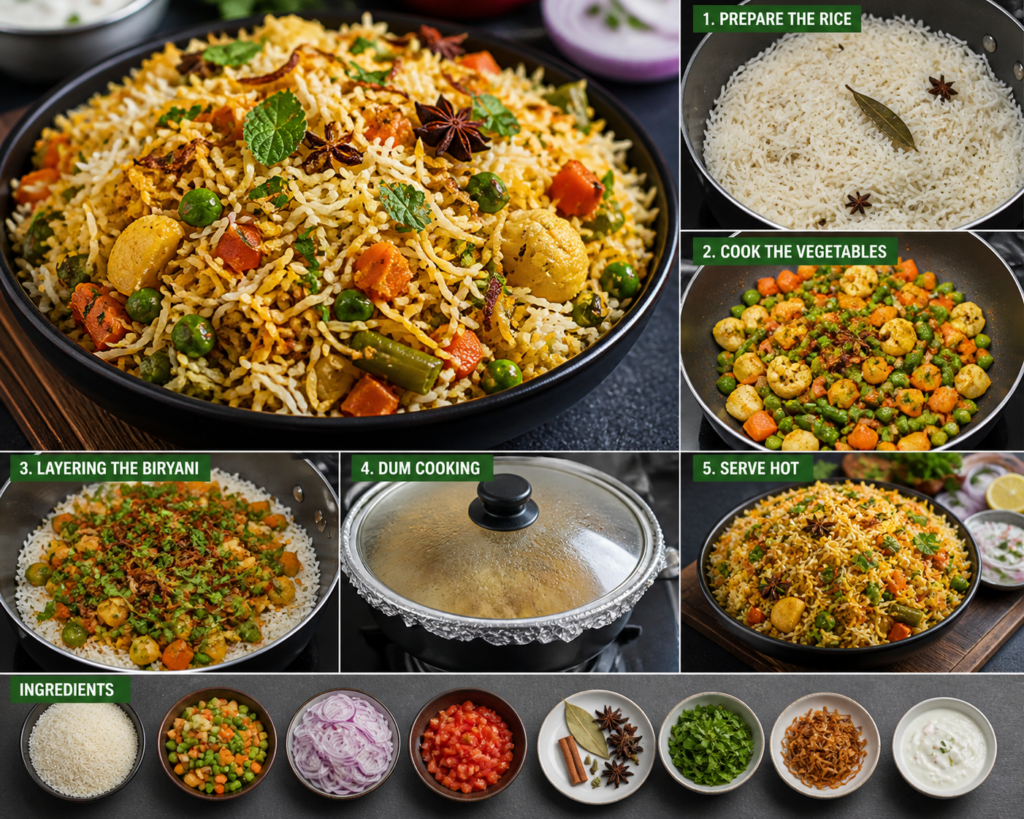
Step 1: Prepare the Rice
Wash basmati rice thoroughly and soak it for 20–30 minutes. Cook until it is 70% done, then drain and set aside.
Step 2: Cook the Vegetable Masala
Heat oil or ghee in a heavy-bottom pan. Add whole spices and sauté until fragrant.
Add sliced onions and cook until golden brown. Then mix in ginger-garlic paste, green chilies, and tomatoes. Cook until the mixture softens.
Next, add vegetables along with spices and yogurt. Cook for 5–7 minutes until partially tender.
Step 3: Layering Process
Spread the vegetable mixture evenly. Add a layer of partially cooked rice on top. Sprinkle mint and coriander leaves.
Repeat layers if needed for richer flavor.
Step 4: Dum Cooking (Key Step)
Cover the pot tightly and cook on low flame for 15–20 minutes. This allows flavors to blend perfectly and gives the biryani its signature aroma.
Expert Tips for Perfect Vegetable Biryani
- Use aged basmati rice for better aroma
- Do not overcook rice before layering
- Always cook on low flame during dum
- Add fried onions (optional) for restaurant-style taste

Serving Suggestions
Vegetable biryani is best served hot with:
- Raita (yogurt-based side dish)
- Fresh onion salad with lemon
- Pickle for extra spice
Balanced meals like this are often recommended by health authorities such as World Health Organization.
Health Benefits of Vegetable Biryani
This dish offers a good mix of nutrients:
- Fiber from vegetables supports digestion
- Carbohydrates from rice provide energy
- Spices aid metabolism and flavor without excess fat
You can make it healthier by reducing oil and increasing vegetable quantity.
Why Vegetable Biryani Recipe is a Perfect Choice for Every Occasion
The vegetable biryani recipe is not just another rice dish—it is a complete meal that balances taste, nutrition, and satisfaction. What makes it truly special is its ability to fit into almost any occasion, whether it’s a quick family lunch, a festive celebration, or even a weekend treat.
One of the biggest advantages of vegetable biryani is its versatility. You can easily customize it based on your taste preferences or the ingredients available in your kitchen. For instance, if you prefer a richer flavor, you can add ghee and fried onions. On the other hand, if you are looking for a lighter version, you can reduce oil and increase the quantity of vegetables. This flexibility makes it a go-to recipe for both beginners and experienced cooks.
Moreover, the layering technique used in vegetable biryani plays a crucial role in enhancing its flavor. Instead of mixing everything together like a regular rice dish, the ingredients are layered carefully. This allows the rice to absorb the aroma of spices and vegetables, resulting in a dish that is both fragrant and deeply flavorful. The slow cooking process, also known as dum cooking, ensures that every grain of rice remains separate while still being infused with rich taste.
Nutritional Values in Veg biryani
Another important aspect of vegetable biryani is its nutritional value. Unlike many heavy meals, this dish offers a good combination of carbohydrates, fiber, and essential nutrients. Vegetables like carrots, beans, and peas provide vitamins and minerals, while basmati rice gives the body the energy it needs. When prepared with the right amount of oil and spices, vegetable biryani can be both healthy and satisfying.
In addition, vegetable biryani is a great option for those who want to enjoy restaurant-style food at home without compromising on quality. With the right ingredients and simple techniques, you can recreate the same taste and aroma in your own kitchen. This not only saves money but also gives you control over the ingredients, making the dish healthier.
Who can taste veg biryani?
Finally, what truly makes vegetable biryani stand out is its universal appeal. It is loved by people of all age groups, making it a safe and delicious choice when cooking for guests or family gatherings. Whether served with raita, salad, or pickle, it always delivers a satisfying experience. Even my grandmother also prepare vegetable biryani recipe and enjoy the flavour.
Frequently Asked Questions (FAQ)
Can I make vegetable biryani without yogurt?
Yes, yogurt can be skipped or replaced with lemon juice for slight tanginess.
Which rice is best for vegetable biryani?
Basmati rice is ideal due to its long grains and aroma.
How do I prevent mushy biryani?
Cook rice only 70% before layering and avoid excess water.
Can I make this in a pressure cooker?
Yes, but dum cooking gives better flavor and texture.
Conclusion
The vegetable biryani recipe is a perfect blend of tradition, taste, and nutrition. With the right ingredients and method, you can easily recreate restaurant-style biryani at home.